


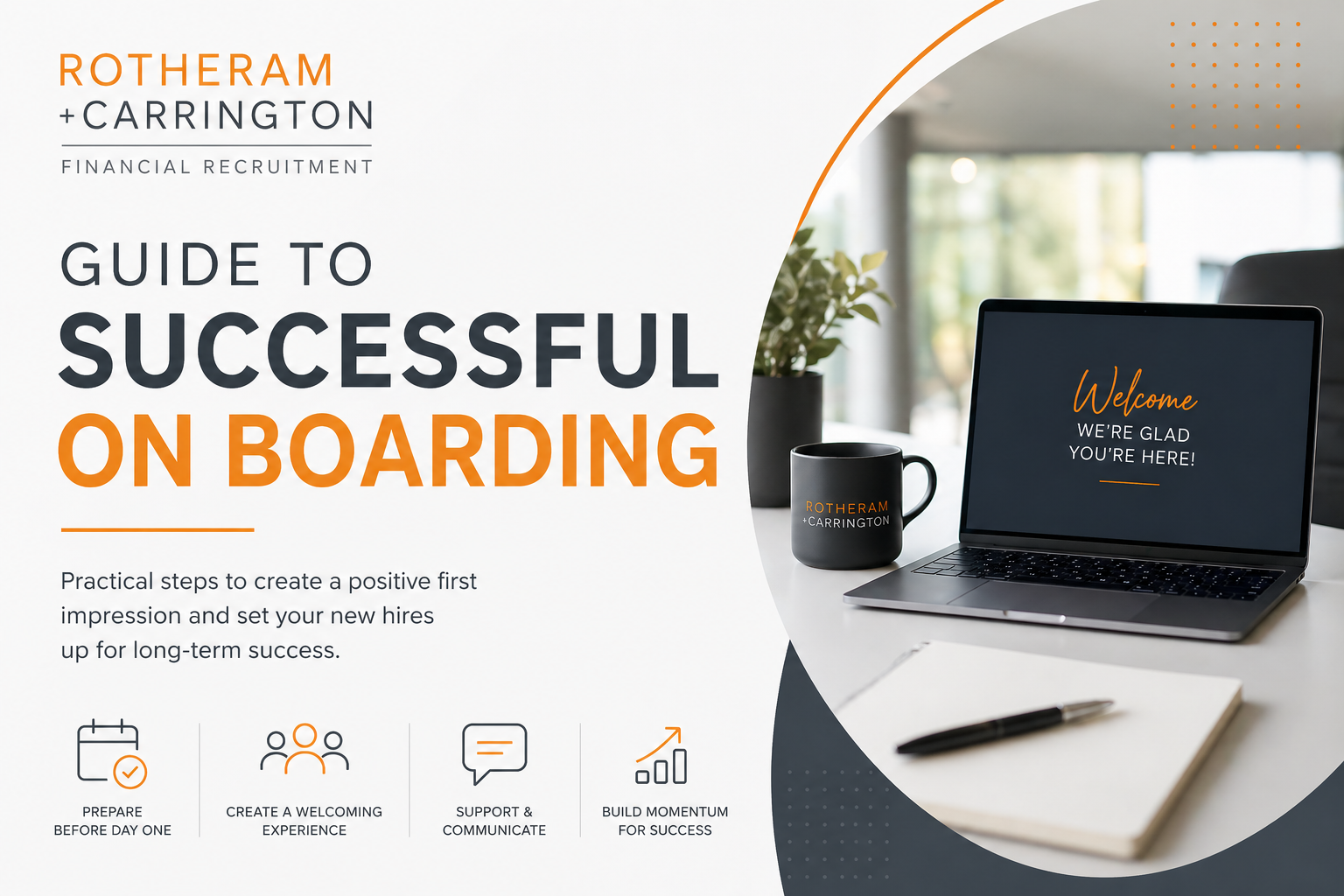
21 Jul A Practical Guide to Welcoming New Employees
Recruiting the right person is only part of the equation. What truly determines whether they succeed ‘and choose to stay’ is how they are introduced to your organisation and supported from the outset. A well-considered on-boarding experience helps new employees feel confident in their role, connected to their colleagues, and aligned with the wider goals of the business.
On-boarding should not be viewed as a one-day induction or a checklist of administrative tasks. Instead, it is an ongoing process that begins before a new hire’s first day and continues through their initial weeks and months. Early impressions matter, and a structured, thoughtful approach can significantly influence engagement, productivity, and retention.
Key priorities for effective on-boarding:
- Establish clear communication from offer acceptance through to the first few months
- Ensure all equipment, systems, and access are ready before day one
- Provide a structured plan outlining expectations and milestones
- Assign a point of contact or mentor for guidance and support
- Create opportunities for early wins to build confidence
Preparation before day one is a critical but often overlooked stage. Ensuring that contracts, equipment, and system access are ready in advance sends a clear message that the organisation is organised and values the new employee’s time. Sharing key information ahead of their start date such as what to expect on their first day or who they will be working with can also help reduce uncertainty and create a sense of anticipation.
Pre-boarding essentials:
- Send a welcome email with key information and first-day logistics
- Share company values, culture, and team structure in advance
- Confirm start date details, dress code, and working arrangements
- Prepare a clear schedule for the first week
- Set up introductions with key team members
The first day itself should strike a balance between professionalism and welcome. While there are essential formalities to complete, it is equally important to create a positive and inclusive experience. Simple actions, such as a personal introduction to team members, a clear overview of responsibilities, and time set aside for questions, can make a lasting difference. Feeling welcomed and supported from the beginning builds confidence and encourages early engagement.
First-day focus:
- Deliver a warm, personal welcome
- Introduce the team and key stakeholders
- Provide a clear overview of the role and expectations
- Ensure all systems and tools are accessible
- Allow time for questions and informal conversation
Beyond the first day, consistency becomes key. New employees benefit from clear guidance, regular check-ins, and realistic expectations as they settle into their role. Managers play a crucial role during this period by providing direction, feedback, and reassurance. Structured touch points—whether informal catch-ups or scheduled reviews help ensure that any challenges are addressed early and progress is maintained.
Ongoing support:
- Schedule regular one-to-one check-ins
- Set short-term goals and review progress frequently
- Provide constructive feedback and recognition
- Encourage continuous learning and development
- Adjust support based on individual needs
It is also important to consider the social aspect of on-boarding. Building relationships within the workplace can significantly impact how quickly someone feels part of the team. Encouraging collaboration, introducing key contacts, and creating opportunities for informal interaction all contribute to a stronger sense of belonging.
Encouraging integration:
- Facilitate informal team interactions or social introductions
- Pair new hires with a buddy or mentor
- Promote cross-team collaboration early on
- Create an inclusive and open team environment
- Recognise contributions to build confidence and engagement
This guide is based on widely recognised on-boarding practices and practical workplace experience rather than original survey data. The aim is to provide clear, realistic guidance that can be applied across different types of organisations, regardless of size or sector.
By approaching on-boarding as a continuous and intentional process, organisations can create a more positive experience for new hires. In turn, this not only supports individual success but also strengthens team cohesion and long-term business performance.
How Rotheram Carrington Can Help
At Rotheram Carrington Financial Recruitment, we understand that every hiring decision matters.
For over 10 years, we have partnered with businesses across Cheshire, Merseyside, Greater Manchester and North Wales, helping them secure high-calibre finance professionals on both a permanent and interim basis.
Whether you’re looking to appoint a Finance Director, Financial Controller, Management Accountant, FP&A specialist, Finance Business Partner or require immediate interim support, our focus is always on delivering a recruitment solution that adds genuine value to your business.
We also work closely with finance professionals at every stage of their careers, providing market insight, career advice and access to opportunities that may not be advertised elsewhere.
If you’re considering your next finance hire, exploring interim solutions, or simply want an honest conversation about the current market, we’d be delighted to help.
Rotheram Carrington Financial Recruitment
Specialist Finance & Accountancy Recruitment across Cheshire, Merseyside, Greater Manchester and North Wales.
📞 01244 980591
📧 sarah@rotheramcarrington.co.uk
🌐 www.rotheramcarrington.co.uk